Prospeo vs Seamless: Which Prospecting Tool Is Better?
Seamless Team
July 17, 2026
This article is a comparison of Prospeo vs. Seamless.AI, two sales prospecting platforms designed to help teams find prospects, uncover contact information, and turn that data into pipeline.
There's a saying in sales: "Time kills all deals." The longer it takes to identify the right prospect, find accurate contact information, and start a conversation, the more likely an opportunity is to disappear altogether.
That's why prospecting tools have become such a critical part of the modern sales stack. Unlike traditional sales processes, reps can no longer afford to spend hours piecing together account information from multiple sources. They need accurate data that helps them move from discovery to outreach without losing momentum.
Both Prospeo and Seamless help sales teams reach the right people, at the right companies, at the right time. But what’s the difference between Prospeo vs Seamless.AI, and which is best for your team?
TL;DR
Seamless is the better choice for sales teams that need a broader, scalable prospecting platform, while Prospeo is better suited for users focused on finding and verifying contact information for prospects they already know.
Prospeo offers a simpler email-discovery workflow, but Seamless goes further with account discovery, enrichment, prioritization, automation, and sales engagement.
For teams looking to build pipeline at scale rather than just uncover contact data, Seamless offers the more complete prospecting workflow.
Core Prospecting Tool Features Compared
At first glance, Prospeo and Seamless appear to solve the same problem: helping sales teams find contact information faster. The difference is scope.
Prospeo is built primarily around email discovery and verification. Seamless goes beyond contact discovery by helping users identify target accounts, find decision-makers, enrich records, prioritize prospects, and move from research into outreach.
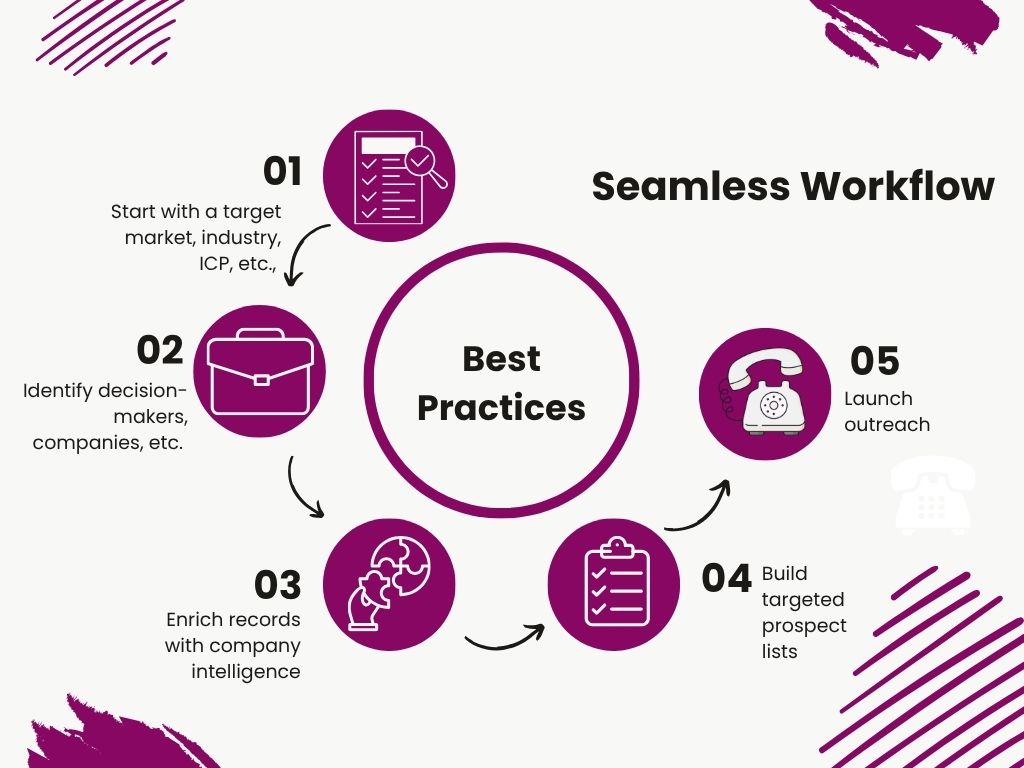
Here's what a day with Seamless looks like
Seamless
Seamless supports a broader prospecting workflow. Instead of beginning with a known prospect, users can start with a market, industry, territory, or ICP.
From there, Seamless can help you identify companies, discover decision-makers, enrich records with company intelligence, and build targeted prospect lists.
Pros:
Supports both account and contact discovery
Helps teams identify decision-makers within target companies
Includes enrichment, company intelligence, and prospect prioritization
Better suited for prospecting motions that start before a specific contact is known
Can support a larger portion of the prospecting workflow in one platform
Cons:
Broader functionality can require more onboarding
Teams with very limited prospecting needs may not need the full feature set
This difference matters most as prospecting volume increases. A lightweight contact-finding tool may be enough for individual sellers, while larger teams often need a system that helps determine who to target before contact information is ever retrieved.
Prospeo
Prospeo is designed for users who already have a person or company in mind and need to uncover or verify contact information. That narrower focus creates a relatively simple workflow for contact discovery.
Pros:
Strong focus on professional email discovery and verification
Straightforward workflow for known prospects
Useful when the target contact or company has already been identified
Less functionality to learn before getting started
Cons:
Less comprehensive for account discovery and broader market research
More dependent on users knowing who they want to contact first
May require additional tools for prioritization, deeper account intelligence, and engagement
Prospecting and Lead Generation Capabilities
When evaluating a prospecting or lead-generation platform, sales teams typically look for more than access to an email address. They need to know whether a tool can help them identify the right accounts, find the right people inside those accounts, keep contact data current, prioritize opportunities, and move prospects into outreach without adding unnecessary manual work.
The best fit depends largely on where your prospecting process starts.
A streamlined Prospeo workflow
Prospeo
Prospeo performs well when a rep has already identified the person or company they want to reach.
Useful for recruiters, founders, and smaller teams building targeted lists
Keeps the core lead-finding process relatively simple
Cons:
Less suited for teams that need to discover target accounts from scratch
Provides less support for broader territory, ICP, and buying-committee research
Often requires another system to handle the next stages of the sales workflow
Prospeo's narrower scope is also what makes it attractive to its target customer. A founder, recruiter, or individual seller may not need a large prospecting platform with multiple layers of account intelligence and automation. If the main job is simply finding and verifying contact information for people already identified, Prospeo can deliver that without adding unnecessary complexity.
Where Prospeo begins to fall short is when the prospecting problem becomes broader. Teams operating across large territories, complex buying committees, or high-volume outbound motions may need more help identifying which accounts to pursue, who matters inside those organizations, and where reps should focus first.
Seamless
Larger prospecting motions often begin before a specific prospect is identified.
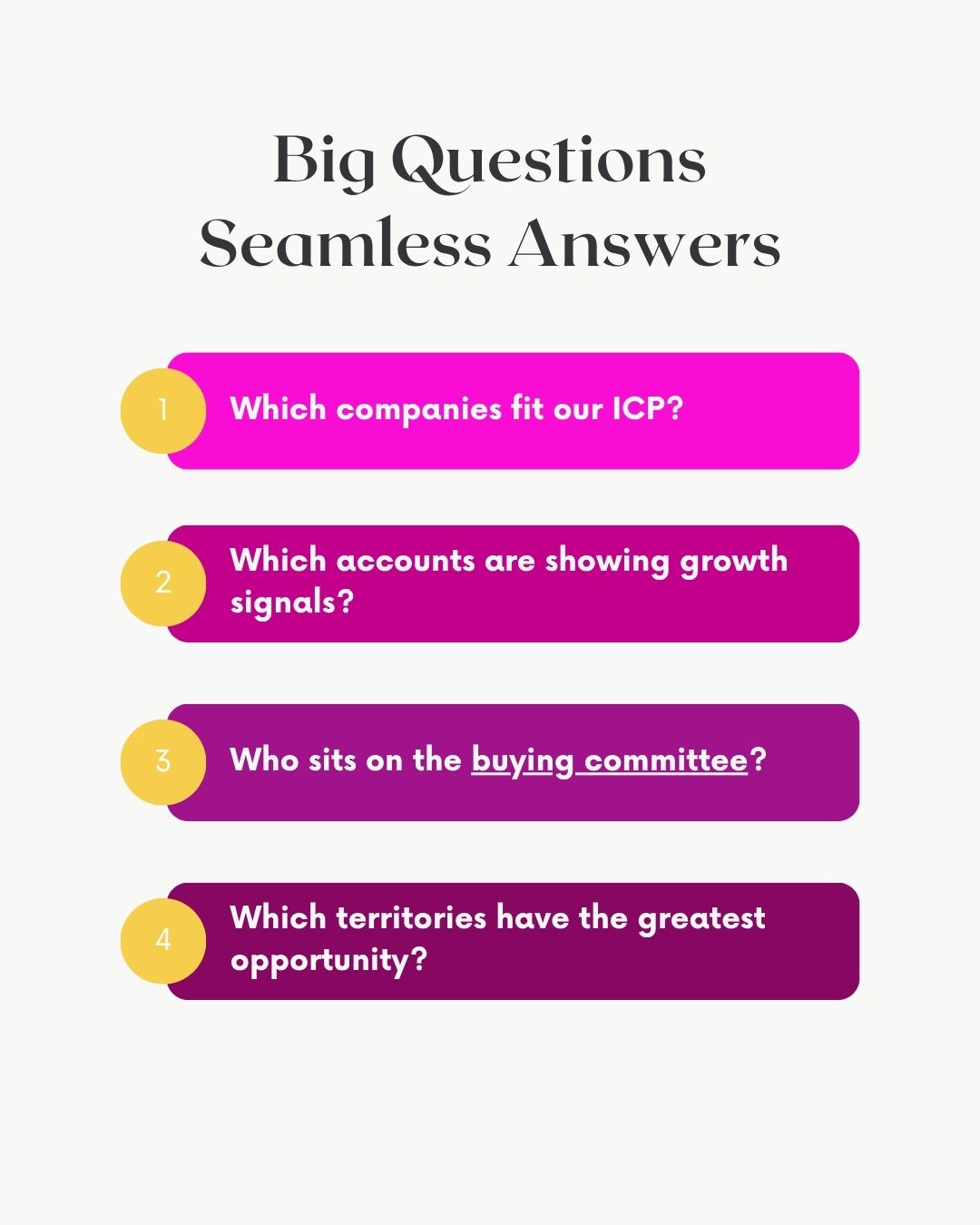
Sales teams may first need to answer questions such as:
Seamless is designed around those broader questions and can then carry the workflow into contact discovery and engagement.
Pros:
Supports ICP-based account and contact discovery
Helps identify decision-makers and buying committees
Provides enrichment and account intelligence
Supports prospect prioritization before outreach
Better suited for scalable outbound and pipeline-generation workflows
Cons:
More capabilities mean more configuration and onboarding
May be broader than necessary for users who only need occasional contact lookup
For teams building repeatable outbound motions, the ability to move from market selection to account discovery, contact discovery, enrichment, and outreach can reduce the amount of manual work required between each step.
However, larger prospecting motions often begin before a prospect is identified. Sales leaders frequently need to answer questions like:
If you've got questions from ICP to buying committee, Seamless can answer
Ease of Use and Integrations
Ease of use often comes down to the tradeoff between simplicity and breadth. A focused tool can be easier to learn, while a broader platform may take longer to configure but eliminate more manual work once the workflow is established.
Prospeo
Prospeo's focused feature set contributes to a relatively straightforward user experience.
Most users can install the browser extension, connect their workflows, and begin finding contact information quickly. The learning curve is relatively light because the primary use case is clear: discover and verify contact information.
Pros:
Simple, focused user experience
Relatively light learning curve
Browser extension supports quick prospect research
Easy fit for workflows centered on contact retrieval
Cons:
Narrower feature set means users may need other tools for additional prospecting tasks
More workflow handoffs may be required between discovery, enrichment, prioritization, and outreach
Integrations can connect the stack, but the overall workflow may remain distributed across multiple platforms
Seamless
Seamless introduces more functionality, which naturally expands onboarding requirements. Users gain access to contact discovery, company intelligence, enrichment, account research, prospect prioritization, and additional workflow capabilities.
Where Seamless becomes especially valuable for larger revenue teams is in how it connects prospecting data to the rest of the GTM stack. Seamless integrates directly with major CRMs including Salesforce, HubSpot, Microsoft Dynamics, Pipedrive, and Zoho CRM, allowing teams to move newly researched contacts and companies into the systems where reps already work. With Salesforce and HubSpot, teams can import prospect data, enrich existing records, and reduce manual CRM updates.
Seamless also connects with sales engagement platforms such as Salesloft, Outreach, and Mixmax. For example, the Salesloft integration can enrich contacts with verified emails and phone numbers, bulk import prospect lists, and bring prospect intelligence into the engagement workflow so reps can run outreach more quickly.
For teams with more customized workflows, Zapier connects Seamless with 6,000+ applications. That makes it possible to send newly researched prospects to tools such as Google Sheets, trigger Slack notifications, push data into marketing or email platforms, or build multi-step automations that move a contact from discovery to enrichment to CRM automatically. Seamless also supports LLMs like ChatGPT and Claude, giving GTM teams more flexibility in how prospect data moves through AI and workflow systems.
Pros:
Broader integration across prospecting and GTM workflows
Can reduce the number of separate tools reps need to use
Supports contact and company research within the same environment
Better suited for larger or more mature revenue organizations
Integrates with CRM and sales engagement systems
Cons:
More features can create a steeper learning curve
Teams may need additional setup to take advantage of the full platform
The distinction often comes down to organizational maturity. A small startup may prioritize getting started quickly with a focused tool, while a scaling revenue team may prefer a platform that consolidates more of the workflow.
Pricing and Value
Pricing is easiest to compare when the underlying use cases are similar. In this case, the two platforms package value differently: Prospeo is centered more heavily on contact discovery, while Seamless is positioned around a broader prospecting workflow.
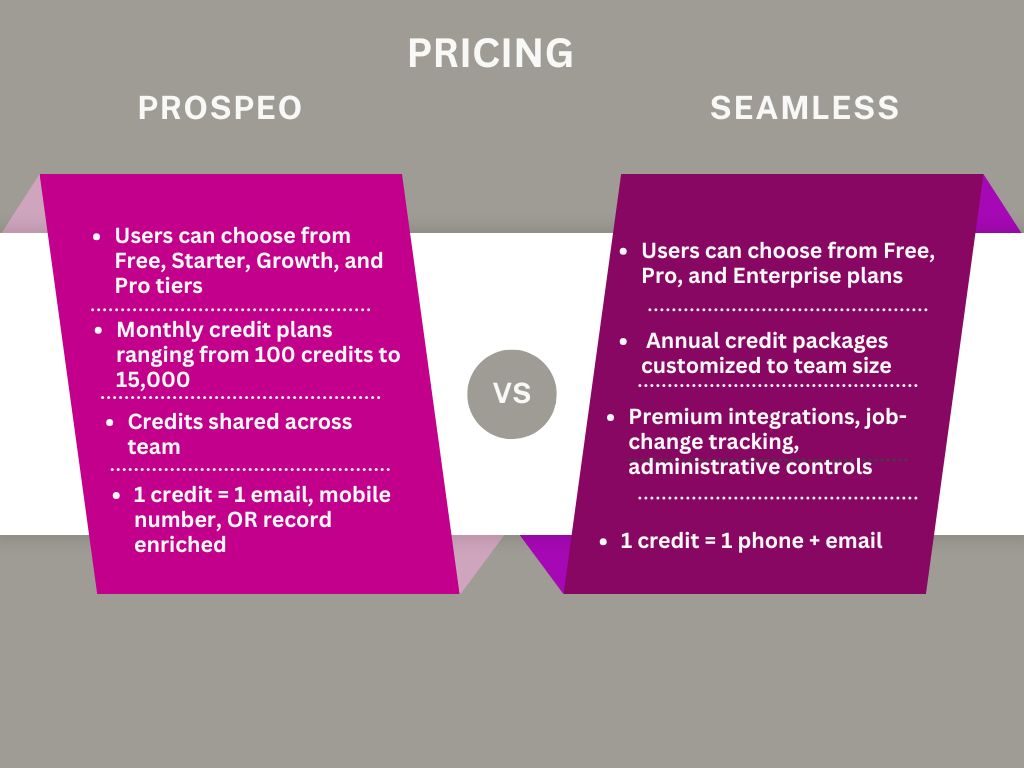
Prospeo uses a transparent, credit-based model with publicly available plans (Prospeo):
If pricing is your #1 concern, don't look any further
Users can choose from Free, Starter, Growth, and Pro tiers, with monthly credit allocations ranging from 100 credits on the Free plan to 15,000 credits per user on the Pro plan.
Credits are shared across the team and consumed when users reveal emails, mobile numbers, or enrich records.
Pros:
Publicly available pricing
Easy to understand how usage maps to credits
Free entry-level option
Strong value for teams primarily focused on contact discovery and verification
Cons:
Value is more closely tied to contact lookups and credit consumption
Larger prospecting workflows may still require additional software
Costs across multiple tools can become more relevant as the sales motion expands
For a founder, recruiter, or small outbound team, that predictability can be a major advantage. If the requirement is simply to uncover a defined number of contacts every month, Prospeo makes it easy to understand what that activity costs.
For teams focused primarily on email discovery and contact verification, this structure translates usage into cost.
Seamless
Seamless approaches pricing from a broader workflow perspective.
Its Pro and Enterprise plans include annual credit packages, real-time contact and company search, premium integrations, job-change tracking, Connect, and administrative controls.
Additional capabilities such as Buyer Intent, Data Enrichment, API access, and Autopilot can be added as prospecting requirements become more sophisticated.
Pros:
Pricing can scale with broader prospecting requirements
Supports more stages of the prospecting workflow
Can reduce dependence on separate research, enrichment, and engagement tools
Additional capabilities can be added as sales operations become more complex
Cons:
Pricing is less immediately transparent than Prospeo's published tiers
Broader packages may exceed the needs of users who only want email discovery
This distinction becomes more important as sales organizations grow.
A founder or small outbound team may primarily care about how many contacts they can uncover each month. A larger revenue organization is more likely to ask:
How many tools are required to move from discovery to outreach?
How much manual research still exists in the workflow?
At that point, platform value extends beyond the cost of individual credits or contact reveals and begins to include the amount of rep time, manual work, and software consolidation the platform can deliver.
Which Prospecting Tool Should You Choose?
If your primary challenge is finding and verifying email addresses for prospects you've already identified, Prospeo may be sufficient. Its streamlined workflow is designed to help users quickly discover contact information. For example, a recruiter sourcing candidates or a founder building an initial prospect list may value simplicity over additional functionality.
Prospeo vs. Seamless: Which would you choose?
However, if your team needs an easily scalable method for identifying and reaching out to prospects, Seamless is a better fit. Rather than functioning primarily as an email-finding tool, it supports the broader prospecting motion that modern revenue teams rely on.
As prospecting becomes more complex, the ability to reduce friction across the entire workflow often matters more than any individual feature (ScienceDirect). That's the problem Seamless is built to solve.
Side-by-Side Feature Comparison Table
A side-by-side feature list is only useful if you know what to look for. We designed the table below to make that comparison easier by breaking down all the relevant similarities and differences between Prospeo and Seamless in one easy-to-read place, so you can quickly see where each platform fits into a prospecting workflow.
Feature / Capability
Prospeo
Seamless
Primary Use Case
Email discovery and contact verification
End-to-end prospecting, lead generation, enrichment, prioritization, and outreach
Contact Discovery
Finds professional email addresses for already-identified prospects
Finds contacts and decision-makers based on industry, market, territory, company, and other criteria
Email Verification
Core capability for verifying discovered email addresses
Supports accurate, real-time contact data as part of a broader prospecting workflow
Phone / Mobile Data
Mobile numbers can be revealed using credits
Contact data includes phone and other prospect information within the platform
Company Discovery
More focused on retrieving information for known prospects or companies
Helps users identify companies that match target-account criteria
Company Intelligence
Limited compared with Seamless
Provides company intelligence to support account research and qualification
Account Research
Primarily centered on contact lookup
Supports broader account research before outreach
Lead / Account Prioritization
Not highlighted as a core capability
Helps teams prioritize accounts and determine where reps should focus first
Data Enrichment
Record enrichment available and consumes credits
Dedicated Data Enrichment capabilities for adding contact and company intelligence
List Building
Users generally identify prospects first, then retrieve and export data
Supports building targeted prospect and account lists directly within the workflow
Browser Extension
Browser extension enables quick contact discovery
Prospecting capabilities extend beyond a browser-extension-based workflow
Exports
Exports contacts into external outreach tools
Pro and Enterprise plans include unlimited exports
Integrations
Connects with external tools so users can export data and begin outreach
Premium integrations connect prospecting with the broader revenue tech stack
Sales Engagement
Outreach generally happens in another tool after export
Connect supports engagement as part of the Seamless workflow
Buyer Intent
Not highlighted
Available as an additional capability for identifying higher-intent opportunities
Ease of Use
Simpler, focused workflow with a relatively light learning curve
Broader functionality creates a more comprehensive onboarding experience
Pricing Model
Transparent, credit-based plans: Free, Starter, Growth, and Pro
Pro and Enterprise plans combine credits with broader workflow and platform capabilities
Credit Usage
Credits consumed for email reveals, mobile numbers, and enrichment
Annual credit packages support prospecting alongside unlimited exports and additional platform functionality
Best Fit
Recruiters, founders, or smaller teams primarily needing contact discovery and verification
Scaling sales and revenue teams that want to consolidate prospecting, research, enrichment, prioritization, and engagement
Every prospecting strategy eventually runs into the same constraint: rep time.
Your team can only research so many accounts, verify so many contacts, and build so many lists before outreach starts to slow down. And when prospecting slows, so does the pipeline.
While both Prospeo and Seamless help sales professionals identify potential buyers, Seamless is built to support the entire prospecting motion. From discovering decision-makers through our contact search (or our new AI search that lets you enter a prompt or command and pull leads in seconds) and enriching records to prioritizing accounts and preparing outreach, the platform helps remove the manual work that often stands between a rep and their next conversation.
If you're ready to turn prospecting into a more predictable engine for growth, explore how Seamless can help your team find the right opportunity today.
Frequently Asked Questions: Prospeo vs. Seamless
What is the main difference between Prospeo and Seamless?
The main difference between Prospeo and Seamless is scope. Prospeo focuses on finding and verifying professional email addresses and contact information. Seamless supports contact discovery while also helping sales teams identify target accounts, find decision-makers, and enrich records within a broader sales prospecting workflow.
Is Prospeo or Seamless better for sales prospecting?
Seamless is better suited for teams needing an end-to-end sales prospecting platform. The platform helps reps identify companies that match their ideal customer profile, enrich prospect data, and build lists. Prospeo may be a better fit for users who need to find contact information for prospects they have already identified.
Which is better for finding B2B leads: Prospeo or Seamless?
Seamless is designed for broader B2B lead generation because users can begin with criteria such as industry, company size, territory, etc., then identify relevant companies and contacts. Prospeo is particularly useful when the target person or company is already known, and the objective is finding or verifying their contact information.
Does Seamless offer more than contact data?
Yes, Seamless offers more than contact data. Seamless also offers capabilities that support data enrichment, account intelligence, job-change tracking, buyer intent, API access, automated prospecting, integrations, and sales engagement workflows. Access to features just depends on your plan and whatever products you select.
Can Prospeo and Seamless integrate with other sales tools?
Yes, you can integrate Prospeo and Seamless with other sales tools. Both platforms are designed to fit into broader sales workflows and connect to other sales and outreach systems. Seamless also provides integrations and workflow capabilities designed to reduce busywork as you move from discovery to outreach.
Is Seamless accurate?
Seamless is accurate for finding and verifying B2B contact and company data in real time. The platform continuously searches for current business emails, phone numbers, and company information as users prospect, helping reduce stale records and improve data quality.
No B2B database is 100% accurate because contact information changes constantly.
Sales intelligence and prospecting expert with years of experience to help sales teams grow and hit quota. Voted one of the top startups in America and rated as the highest software in Customer Satisfaction from G2 best software awards in 2025. Join our Reddit community for more product updates and sales tips. https://www.reddit.com/r/Seamless_AI/